
 BM
BM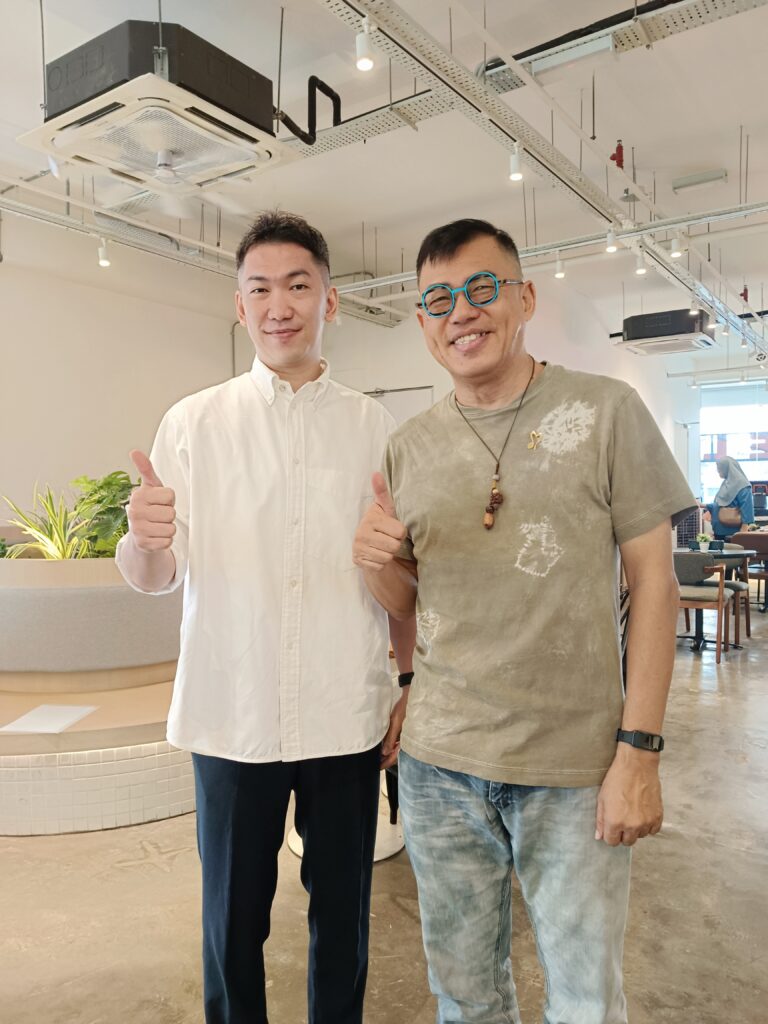
KUALA LUMPUR — The Malaysia-China Culture and Education Association (MCCEA) and the Singapore Music and Arts Association are in discussions with cultural and education organisations in China to jointly organise a Chinese-language writing competition spanning Malaysia, Singapore and China.
The proposed competition would invite students, young people and anyone with an interest in writing to take part, using the exchange of work, the collision of ideas and cultural expression to carry Chinese culture forward and deepen people-to-people cultural and educational interaction across the three countries.
MCCEA President Wong Kang Thai met recently with Qi Zhequan, President of the Singapore Music and Arts Association, for an in-depth discussion of the concept. Both agreed that in an era without borders, shaped by digitalisation and the rapid advance of artificial intelligence, cultural exchange should not be constrained by geography. A writing competition can run on online submission, online judging and online exchange, allowing creators from different regions and backgrounds to take part together.
Why writing, and why now
Wong said the written word is one of the most important vehicles for cultural transmission. Chinese culture has endured across millennia precisely because generation after generation has used writing to record thought, express emotion, preserve history and pass on values — allowing people of different eras to converse across time and space.
The arrival of the AI era, he said, does not mean that writing will be made obsolete. On the contrary: precisely because AI can now generate articles, verse, stories and all manner of content at speed, the value of original human writing needs more than ever to be seen, respected and encouraged.
AI can help organise material, spark ideas and improve efficiency, he noted, but work that truly moves people still comes from lived experience, emotional depth, moral choice, cultural roots and independent thought.
“AI can imitate a sentence, but it cannot replace the felt experience of a human life. AI can assemble words, but it cannot actually live through joy and sorrow, love of family and country, cultural memory, or the weight of an era. The faster artificial intelligence develops, the more we must treasure human originality,” he said.
Beyond encouraging writing, Wong said, the competition aims to build reading ability, critical thinking, narrative skill and cultural confidence in the younger generation. These matter especially in the AI era, because the society of the future needs not people who can merely operate tools, but people who can judge, understand, create and express.
Art without borders
Qi said culture and the arts know no borders, and writing is among the art forms best able to cross them. An essay, a poem or a story can resonate with readers in very different places, and gives the writer the most direct and delicate means of expressing an inner world.
The Singapore Music and Arts Association has long emphasised cross-disciplinary development in the arts, music and cultural education, he said, and writing carries the same power of emotional expression and cultural transmission as music does. Combining the cultural and educational resources of Malaysia, Singapore and China would help build a regional cultural brand with real influence.
Artificial intelligence has changed the tools of creation and the channels of distribution, he added, but it has also prompted people to reconsider where human creativity actually resides. Genuinely good writing is not merely a well-turned sentence; it is the writer’s observation of life, understanding of culture and response to the times.
“The AI era is not the end point of the written word. It is the beginning of writing being redefined. The more advanced the technology, the less the humanistic spirit can afford to be absent; the more content is mass-generated, the more precious original thought becomes,” he said.
Proposed format
Both sides envisage separate categories for secondary school students, tertiary-level youth and an open division. Themes could cover Chinese culture, love of family and country, urban memory, the dreams of young people, technology and the humanities, cultural exchange among Malaysia, Singapore and China, family stories, and cultural transmission within a plural society.
The competition would also welcome a range of forms — essays, poetry, short stories, flash fiction, criticism, letters and new-media short-form writing — so that entrants of different ages and different creative styles all have room to work.
Continuity, both sides agreed, is what matters most in cultural work. A single competition can ignite interest, but extending it into a long-term platform would gradually cultivate a cross-border community of Chinese-language writers, letting more young people build friendships and broaden their horizons through writing while strengthening their identification with and understanding of Chinese culture.
“We hope this will not just be a competition, but a beginning. From a single essay, let young people come back to the written word. From a single exchange, let the cultural and education sectors of Malaysia, Singapore and China build deeper cooperation. From a single platform, let Chinese culture be carried forward in a younger, more open and more vital form in this new era.”
中文全文
马中文化教育协会与新加坡音乐与艺术协会探讨联合中国单位策办马新中文字创作比赛 让文字在AI时代展现原创力量
(吉隆坡讯)马中文化教育协会与新加坡音乐与艺术协会,正探讨联合中国相关单位及文化教育组织,共同举办一场横跨马来西亚、新加坡与中国的文字创作比赛,鼓励学生、青年及对文字创作有兴趣的人士,通过作品交流、思想碰撞与文化表达,进一步传扬中华文化,促进三地民间文化教育互动。
马中文化教育协会会长王康泰与新加坡音乐与艺术协会会长祁哲泉日前会面,双方针对这项理念进行深入讨论,并认为在当今无国界、数字化及人工智能快速发展的时代,文化交流不应受到地域限制,文字创作比赛也可以透过线上提交、线上评审及线上交流方式,让更多来自不同地区、不同背景的创作者共同参与。
王康泰指出,文字是文化传承最重要的载体之一。中华文化能够历经千年而不断延续,正是因为一代又一代人透过文字记录思想、表达情感、保存历史、传递价值,也让不同时代的人能够跨越时间与空间进行对话。
他表示,人工智能时代的到来,并不代表文字创作会被淘汰。相反,正因为AI已能快速生成文章、诗句、故事及各类内容,人类原创文字的价值才更需要被看见、被重视、被鼓励。
他指出,AI可以协助整理资料、激发灵感及提升效率,但真正打动人心的作品,仍然来自人的生活经验、情感深度、价值选择、文化根源与独立思考。
“AI可以模仿语句,却无法取代人的生命感受;AI可以组合文字,却不能真正经历悲欢离合、家国情怀、文化记忆与时代重量。越是在人工智能快速发展的年代,我们越要珍惜人的原创能力。”
他指出,举办马新中文字创作比赛,除了鼓励写作,也希望培养年轻一代的阅读能力、思辨能力、叙事能力及文化自信。这些能力在AI时代尤其重要,因为未来社会需要的不是只会使用工具的人,而是懂得判断、理解、创造及表达的人。
祁哲泉则表示,文化艺术无国界,而文字正是最能穿越边界的艺术形式之一。一篇文章、一首诗、一段故事,往往能让不同地区的人产生共鸣,也能让创作者以最直接、最细腻的方式表达内心世界。
他指出,新加坡音乐与艺术协会一直重视艺术、音乐及文化教育的跨界发展,而文字创作与音乐艺术同样具有情感表达与文化传播的力量。若能结合马来西亚、新加坡及中国的文化教育资源,将有助于建立更具影响力的区域文化品牌。
他表示,人工智能虽然改变了创作工具和传播方式,但也提醒人们重新思考“人”的创造力究竟何在。真正好的文字,不只是漂亮的句子,而是作者对生活的观察、对文化的理解、对时代的回应。
“AI时代不是文字的终点,而是文字创作重新被定义的开始。越是科技发达,人文精神越不能缺席;越是内容大量生成,原创思想越显珍贵。”
双方认为,未来这项比赛可设立不同组别,包括中学生组、大专青年组及公开组,题材可围绕中华文化、家国情怀、城市记忆、青年梦想、科技与人文、马新中文化交流、家庭故事及多元社会下的文化传承等主题。
比赛也可鼓励不同文体创作,包括散文、诗歌、短篇小说、微型小说、评论、书信及新媒体短文等,让不同年龄及不同创作风格的参赛者都有发挥空间。
他们认为,文化工作最重要的是持续性。一次比赛可以点燃兴趣,但若能延伸为长期平台,便能逐步培养跨国中文创作社群,让更多年轻人在文字中建立友谊、拓展视野,也提升对中华文化的认同与理解。
“我们期待这不只是一次比赛,而是一个开始。从一篇文章开始,让年轻人重新接近文字;从一次交流开始,让马新中三地文化教育界建立更深的合作;从一个平台开始,让中华文化在新时代以更年轻、更开放、更有生命力的方式传承下去。”
About MCCEA: Malaysia-China Culture and Education Association (MCCEA), Registration No. PPM-034-10-08072025, is dedicated to advancing cooperation between Malaysia and China in culture, education and TVET, with ASEAN and the international community in view. Website: www.mccea.org.my
