

 BM
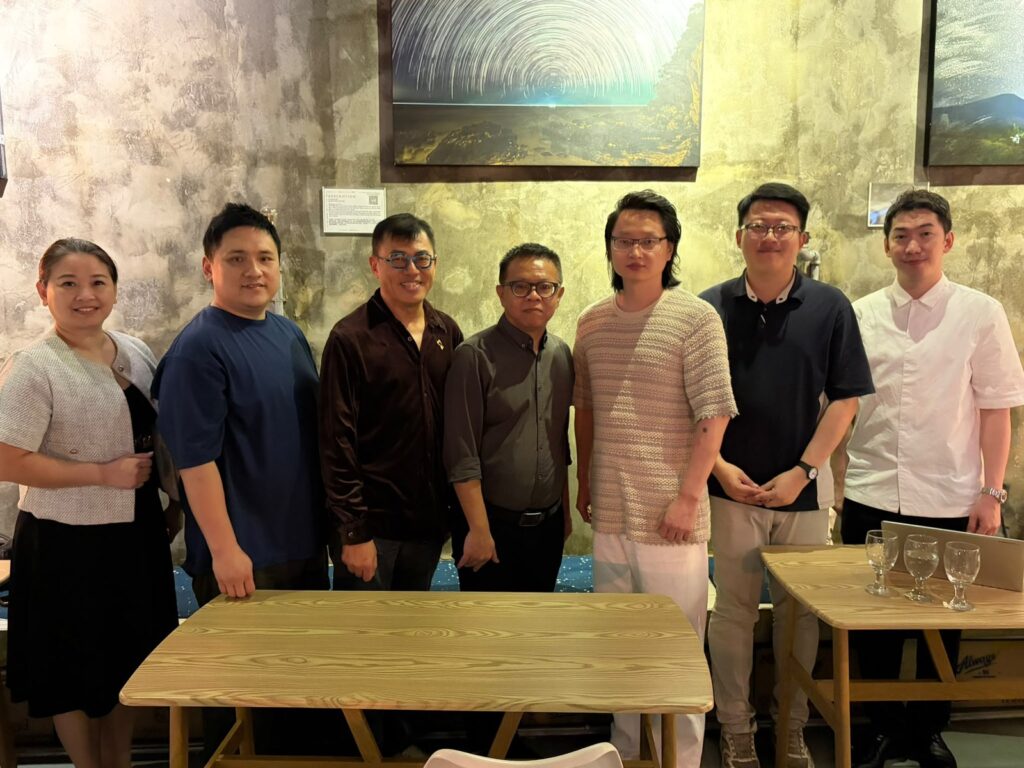
Artificial intelligence has arrived in the recording studio, and the question facing musicians is no longer whether to use it but what it can and cannot do. That was the premise of “Tian Hua Qi Yin: When Traditional Music Meets AI”, a cross-border music sharing session held in Petaling Jaya and co-organised by the Malaysia-China Culture and Education Association (MCCEA), Light Space and the Singapore Music and Arts Association.
Chinese musician Dasheng and Malaysian musician Xu Tianhua led the session, sharing what they have learned, researched and actually practised in AI-assisted music creation. Rather than speaking in abstractions, they played a series of works completed with the help of AI tools, giving the audience a concrete sense of where the technology sits in a working composer’s process. The session drew music creators, educators and young music enthusiasts.
Opening the event, MCCEA President Wong Kang Thai noted that AI is reshaping music, art and education at speed — but that this does not mean the humanities and original creation are being replaced. “AI can become a new tool for creators, helping more people turn the melodies and stories in their heads into finished works,” he said. “But what truly determines whether a song has life in it is still human emotion, experience and culture.”
That distinction matters more than it might sound. A great deal of public conversation about AI in the arts collapses into either dismissal or hype, and neither is much use to a young person deciding whether to learn an instrument or a digital audio workstation. The more practical framing — the one this session took — is that the tool lowers the barrier to producing something, while the reason anyone listens twice remains unchanged.
Xu Tianhua said what gratified him most was the audience response: listeners were not merely curious about the technology, but were genuinely moved by works such as “The Corner Café” and “Our Youth Recorded in Crow’s Feet”. The emotional response, in other words, came from the songwriting, not the software.
Sessions of this kind are a natural extension of MCCEA’s work in Malaysia-China cultural exchange. Music is one of the few areas where creative practice, technology and education meet in the same room, and where a Malaysian, Chinese and Singaporean organisation can co-host something without needing to translate the subject matter first. The same logic runs through Malaysia-China education cooperation more broadly, and through Malaysia-China TVET cooperation in particular: the technical skill and the human judgement that directs it are not rival investments.
MCCEA thanks Light Space and the Singapore Music and Arts Association for co-organising the session, and the creators and educators who took part. The association intends to continue programming at the intersection of culture, technology and education, and welcomes partner institutions interested in joining future sessions.
中文摘要
由马中文化教育协会、Light Space及新加坡音乐与艺术协会联合主办的“天化祁音:当传统音乐遇上AI”跨国音乐分享会日前在八打灵再也圆满举行。中国音乐人大圣及马来西亚音乐人许天化分享了人工智能音乐创作方面的学习、研究与实际经验,并播放多首运用AI技术辅助完成的作品。马中文化教育协会会长王康泰致开幕词时指出,AI正快速改变音乐、艺术及教育领域,但真正决定一首歌有没有生命力的,仍然是人的情感、经历和文化。许天化表示,最令他欣慰的是观众不只对AI技术感到新奇,而是真正被《街角咖啡馆》及《我们青春记录在鱼尾纹》等作品所感动。马中文化与马中教育的交流,正需要这样把技术与人文放在同一场对话中的平台。
About MCCEA: Malaysia-China Culture and Education Association (MCCEA), Registration No. PPM-034-10-08072025, is dedicated to advancing cooperation between Malaysia and China in culture, education and TVET, with ASEAN and the international community in view. Website: www.mccea.org.my
